
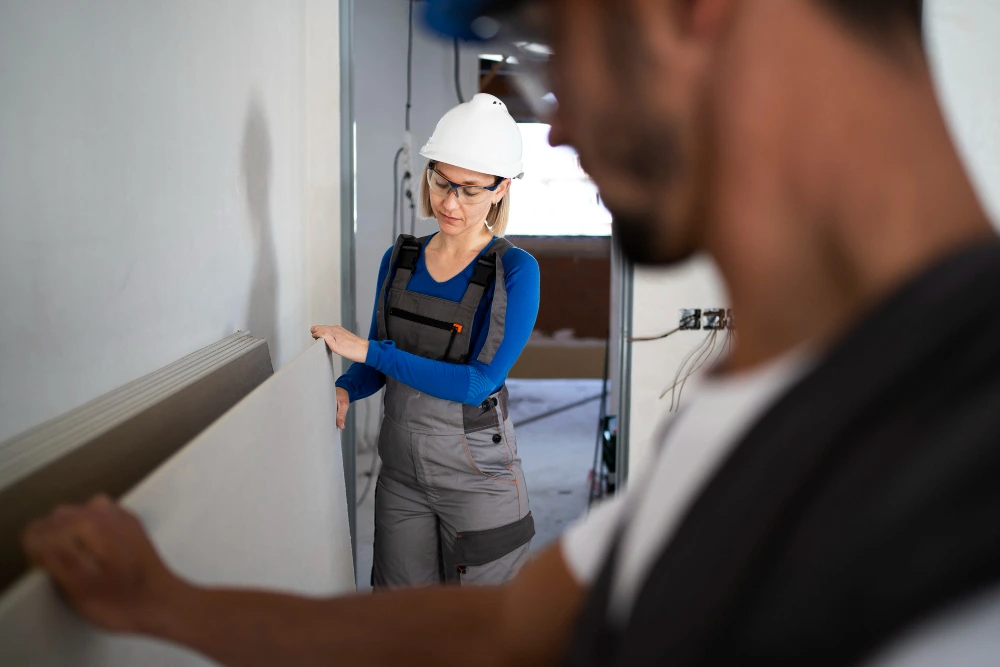
Drywall Estimating Process
In construction, precision isn’t a luxury—it’s a necessity. And when it comes to drywall, getting your estimates right can make the difference between staying on budget or bleeding profits.
Drywall estimating isn’t just about counting sheets—it’s about smart planning. It ensures you order the right amount of materials, assign the right labor, and avoid costly waste or delays. Whether you’re a contractor, builder, or project manager, mastering drywall takeoffs keeps your project efficient and your margins protected.
Utopian Takeoffs Drywall Estimating Services
As seasoned construction estimators, we don’t just calculate—we strategize. This guide breaks down the drywall estimating process, shows you the hidden benefits of getting it right, and explains why accuracy here matters more than you think.
Table of Contents
Key Benefits of Accurate Drywall Estimating
Reduces Cost Overruns
Cost overruns can wreck your budget. A precise drywall estimate gives you clear numbers on materials, labor, and cost—cutting out guesswork and surprise expenses during installation.
Helps with Proper Budget Planning
A solid drywall estimate keeps everyone on the same page—owners, architects, and contractors. It sets clear budget expectations from the start and helps avoid costly delays or mid-project surprises.
Saves Time During Procurement
Knowing exact material needs streamlines ordering—no last-minute runs or costly delays. Fewer hiccups mean faster progress and a more efficient project overall.
Minimizes Material Waste
Overestimate and you waste materials; underestimate and you face delays. A precise drywall estimate cuts waste, saves time, and supports sustainable building.
Supports Competitive Bidding
Accurate drywall estimates give contractors a competitive edge—no underbidding, no overbidding. Just confident, winning bids that boost profit and credibility.
Understanding the Drywall Installation Process
To estimate drywall right, you need to know the key steps of installation. Here’s a quick breakdown to help you plan smarter and bid better.
Framing and Preparation
Drywall estimating services start with solid framing. Ensure all walls and ceilings are built and verified—this is when accurate measurements and any design changes must be locked in.
Drywall Hanging
Mount drywall panels to studs or joists—calculate how many full and cut sheets you’ll need based on room size and panel dimensions (like 4’x8’ or 4’x12’).
Taping & Mudding
Next comes sealing seams. Factor in joint compound, tape, and corner beads based on all corners, edges, and transitions—don’t miss this step for an accurate materials list.
Sanding & Finishing
Smooth out joints with sanding—add more coats for premium finishes like Level 5. This step directly impacts labor hours and overall cost.
Painting Prep
If the drywall crew handles priming or paint prep, flag it early. It affects labor scope and helps avoid surprise charges later
Drywall Estimating Process Step-by-Step
Drywall estimation is a blend of art, science, and experience. Here’s how we approach it:
Review Plans Like a Pro
Start with the blueprints. We dive deep into wall layouts, ceiling heights, and tricky features like soffits and bulkheads. Why? Because every curve and corner affects your material needs—and your budget.
Nail the Takeoff
Next, we measure every wall and ceiling—digitally or by hand. Then we break it down room by room, ensuring no square inch is missed. Accurate takeoffs = fewer surprises later.
Calculate Drywall Sheets Needed Smart Planning
Once we’ve got the square footage, it’s all about strategy. We calculate how many drywall sheets you’ll need—and choose the smartest sizes (like 4’x12’ for high ceilings) to cut down on seams, waste, and labor. Fewer cuts, cleaner installs, and more money in your pocket.
Formula Example:
Total Area / Area per Sheet = Number of Sheets
For instance, if a wall area is 2,400 square feet and you’re using 4’x8’ sheets (32 sq. ft. each):
Rust
2,400 / 32 = 75 sheets (rounded up for waste)
Estimate Joint Compound, Tape, and Screws
It’s not just drywall—you need the right amount of joint compound, tape, and screws to bring it all together. We estimate these essentials based on proven coverage rates, adjusted for your project’s finish level and seam count.
Factor in Waste and Complexity
We always add 10–15% extra for waste—because real jobs have cutouts, tricky angles, and human error. Got lots of windows, arches, or funky layouts? We factor that in too, so you’re never caught short on site.
Estimate Labor Costs and Timeframe
Labor is often the biggest slice of your drywall budget. Smart estimators don’t just eyeball it—they calculate labor hours based on real factors like square footage, job complexity, crew size, and productivity rates.
- Total square footage to be drywalled
- Difficulty of the layout (vaulted ceilings, tight spaces, curves)
- Required finish level (Level 1 to Level 5)
- Crew size and productivity rates
Pro Tip: A high-ceiling custom home and a basic office space won’t take the same time. We adjust labor estimates for every unique job, so your timeline and budget stay on track.
How to Estimate Labor Time?
Here’s a smart rule of thumb: One drywall installer typically covers 100–120 sq. ft. per hour. So for a 2,400 sq. ft. project, you’re looking at around 20–24 hours just for hanging the drywall.
Labor Rate Formula
Total Labor Hours × Local Hourly Rate = Labor Cost
If your area has a labor rate of $45/hour:
24 hours × $45 = $1,080 (for installation only)
Drywall labor isn’t just about hanging sheets—add time for taping, mudding, sanding, and clean-up. Also, factor in union rules, overtime, and tight schedules to avoid surprise costs and keep your estimate accurate.
Finalizing the Estimate
Once you’ve calculated all material and labor costs, it’s time to finalize the estimate:
- Add waste allowances (typically 10–15%)
- Include markups for overhead and profit
- Add permits, equipment rentals, insurance, and other soft costs
- Double-check against project specs to ensure accuracy
A clear, professional estimate includes a breakdown by:
- Materials (with quantities
- Labor (by trade and hours
- Equipment/tools (if charged)
- Total cost (with markups)
Use a clear, professional format with data-backed numbers. It builds trust, speeds up decisions, and makes your estimate easy to understand.
Accurate roofing estimates are the backbone of profitable, on-time projects, helping you avoid costly mistakes from miscalculations to missed permits. At Utopian Takeoffs, we combine satellite imagery, advanced CAD tools, and real-time pricing to deliver fast, precise, and highly competitive bids. Our process empowers contractors to win more jobs, save valuable time, and protect their bottom line with estimates built on precision, strategic planning, and proven expertise.
Tools & Software Used for Drywall Estimating
Digital estimating tools are game-changer—boosting speed, accuracy, and efficiency, especially on big commercial or multi-family jobs.
Popular Estimating Tools:
- PlanSwift – Ideal for material takeoffs and easy markup
- Bluebeam Revu – Great for plan analysis and annotation
- STACK Estimating – Cloud-based, collaborative takeoff and estimating tool
- Trimble Estimation – Comprehensive estimating with integrated cost databases
These platforms help estimators:
- Import and scale PDF drawings
- Click and drag for quick area measurements
- Auto-calculate quantities and generate reports
Investing in the right tool reduces manual errors and provides professional-looking outputs that help win bids.

Common Mistakes to Avoid in Drywall Estimating
As estimators, we’ve seen how simple missteps can lead to costly errors. Here are some common pitfalls you should avoid:
Ignoring Wall Height Variations
Don’t just measure floor space—account for wall height, stairwells, and vaulted ceilings to avoid underestimating materials and labor.
Ignoring Openings
Don’t pay for what you don’t need—skipping the subtraction of windows and doors means overspending on materials. Always deduct their area!
Skipping Finish Level Details
Not all finishes are equal. A Level 5 needs more mud, sanding, and skilled labor than a Level 2. Know the spec, or risk blowing the budget.
Using Flat Per-Square-Foot Pricing
Every project is different. Design, location, finish, and scope all impact cost—so ditch the one-size-fits-all “per sq. ft.” rates. Get detailed, or get burned.
Real-Life Case Study: Houston, TX
One of our recent projects involved a 12,000 sq. ft. office renovation in Houston, TX. The original bid from a subcontractor was 15% over budget.
We stepped in and performed a detailed drywall takeoff:
- Optimized panel sizes to reduce waste
- Identified inaccurate wall measurements in the original plan
- Suggested using 54″ boards for taller wall sections to reduce seams and labor time
Result? The revised estimate cut material waste by 18%, reduced labor hours by 12%, allowing the General Contractor to stay competitive and win the bid.
Get a Fast & Accurate Drywall Estimate From Experts
No matter your goal—winning the job, staying on budget, or cutting costly risks—accurate drywall estimation is your secret weapon. It keeps your project on track, your costs in check, and your clients happy.
At UtopianTakeoffs, we provide:
- Expert drywall takeoffs and estimates within 24–48 hours
- Customized reports based on your project drawings
- Competitive pricing and high accuracy
- 1-on-1 consultation with our estimators
Advanced Drywall Estimating Techniques for Complex Projects
As your construction jobs scale up, guesswork just won’t cut it. That’s why we use advanced estimating techniques designed to boost accuracy, cut risk, and keep your project profitable. Here’s how we take your drywall estimates to the next level
Digital Estimating with Takeoff Software
Using tools like PlanSwift, STACK, or Bluebeam Revu, we can:
- Import digital blueprints and overlay takeoff data
- Accurately measure curved or angled walls
- Adjust dynamically for plan revisions
Automated estimating tools slash manual mistakes and dramatically speed up turnaround times—a game-changer for large commercial projects where precision and deadlines matter most. Get quicker, more accurate bids without the burnout.
BIM (Building Information Modeling) Integration
For BIM-driven projects, we integrate drywall estimation right into the 3D model. This enables real-time quantity takeoffs, instant updates with design changes, and better coordination across teams—saving time, cutting costs, and keeping your project on track from concept to closeout.
- Real-time material quantity extraction
- Instant clash detection with HVAC or framing
- Better collaboration between trades during preconstruction
Parametric Estimating
Rather than measuring line by line, parametric estimation uses cost models based on historical data and key parameters like:
- Square footage
- Room types
- Ceiling height
- Finish level
This technique works well in early design phases when exact drawings may not yet be available.
Best Practices in Drywall Estimating
Whether you’re working on a small renovation or a massive commercial build, these estimating principles ensure your numbers stay sharp, your reputation stays solid, and your clients keep coming back.
Use the Latest Plans—Every Time
Plans change. Walls move. Ceilings shift. Estimating from outdated drawings is one of the fastest ways to blow a budget. Double-check you’re working from the most current set—because one overlooked revision can cost thousands.
Say It Loud, Say It Clear
Assumptions kill clarity. If your estimate depends on site access, lift availability, or standard working hours—spell it out. Clear communication with clients and field crews turns a good estimate into a trusted one.
Track Your Actuals and Learn From Every Job
After a project is complete, compare the original estimate to actual material and labor usage. What was off? What went as expected? Use this to refine your future estimates.
Tailor Your Estimate Like a Pro
Every project tells a different story. Don’t treat a high-rise like a house. Customizing your estimates to fit the structure’s complexity, layout, and access needs means fewer surprises—and a smoother build from start to finish.
Know the Market, Win the Bid
Material and labor prices fluctuate—especially in today’s economic climate. Stay updated with local suppliers and labor rates to ensure your numbers stay competitive.
Process to Get a Drywall Estimate from Our Experts
If you’re a contractor, builder, or project manager looking for reliable estimating support, our process is simple and client-focused:
Send Us Your Project Drawings
Upload PDFs, CAD files, or any format via our secure Website or email.
Receive a Customized Quote
We review your scope, confirm a 24–48 hour turnaround (or more for complex jobs), and provide a clear flat-rate or project-based quote.
Get Your Estimate Report
Receive a detailed report including:
- Material quantities
- Labor hours and costs
- Waste factors
- Markups and assumptions
Reports can be tailored for General Contractors, subcontractors, or bidding use.
Why Work With Us?
✅ Fast Turnaround Most estimates delivered in 24–48 hours
✅ High Accuracy 95%+ accuracy based on project size and scope
✅ Scalable Support From small residential jobs to multi-floor commercial sites
✅ Affordable Pricing Competitive flat rates and monthly packages available
✅ Ongoing Support Have questions? We stay with you through the bidding phase
Frequently Asked Questions
Can I use the same drywall estimator for both residential and commercial projects?
Absolutely—but make sure they’re experienced in both. Residential jobs demand speed and attention to detail, while commercial projects require managing scale, logistics, and compliance. A skilled estimator knows how to handle both without missing a beat.
How fast can I get a drywall estimate?
With us, speed is part of the service. Most estimates are ready within 24–48 hours, depending on the project’s complexity. No long waits—just fast, accurate numbers when you need them.
What’s included in your drywall estimate report?
You’ll get a complete quantity takeoff, detailed cost breakdown (materials, labor, overhead), any key assumptions, and an optional room-by-room or scope-specific breakdown—so you can plan smarter and bid with confidence.
How much drywall do you need?
Drywall sheets are usually 32 sq. ft. (4×8) or 48 sq. ft. (4×12). Just divide your total wall/ceiling area by the sheet size—and don’t forget to add 10–15% extra for waste.
What’s in a drywall estimate?
A good estimate includes everything: material (panels, tape, mud, screws), labor time and rates, waste buffer, taxes, overhead, profit—and sometimes delivery and equipment costs.
Final Thoughts
Drywall estimating Services isn’t just crunching numbers—it’s the backbone of a smooth, profitable project. Whether you’re bidding as a contractor or managing crews as a builder, an accurate estimate ensures every job stays on budget, on schedule, and stress-free. With smart tools, proven processes, and the right experts, you move from guessing to confident building—and that’s how real results happen.
Related Posts
- 10-Point Estimation Accuracy Checklist for Project Owners
 Steps for Accurate Construction Estimates In construction, every dollar counts — and one bad estimate can derail even the best project plan. As a project owner, your decisions hinge on how accurate those numbers are. This 10-point checklist turns complex estimating standards into clear, actionable steps that protect your budget, minimize surprises, and keep your … Read more
 - Why past Data and Experience Matter in Construction Estimation
 Data and Experience Matter in Construction Estimation In today’s fast-changing construction industry, accurate cost estimation can make or break a project. Modern tools like BIM (Building Information Modeling) and AI-powered estimating software have transformed how professionals work. However, the real strength of a precise estimate still comes from historical data, solid analytics, and hands-on experience. … Read more
 - Real-World Application, Challenges, and What’s New for Estimators
 Challenges and What’s New for Estimators Before moving into the next phase of our discussion, we’ve already explored two key areas in previous parts— the evolving future of construction estimation and the latest tools, techniques, and when to use them. Now, in this third part, we’ll shift our focus toward real-world applications, the challenges companies … Read more
 - How New Techniques Are Changing Construction Estimation in the USA
 New Techniques Are Changing Construction Estimation Byline (Staff Reporter) — October 2025 Construction estimating in the U.S. is going through a major transformation. What used to rely heavily on spreadsheets, manual takeoffs, and rough guesswork is now being reshaped by powerful new technologies. In the last couple of years, contractors and project owners have started … Read more
 - When to Use Right Construction Estimation Tools Techniques-Interview Part 2
 When to Use Right Construction Estimation Tools and Techniques InterviewerIn Part 1, we explored AI, BIM, and automation. Let’s dive deeper — what are some of the latest tools and techniques changing the estimation process today? ExpertThe latest wave of tools focuses on integration and precision. Platforms like ProEst, Trimble Estimation, and Bluebeam Revu now … Read more
 - Future of Construction Estimation-Expert Insights & New Trends
 Future of Construction Estimation Estimation Expert: Hashim Khan – Senior Construction Estimation Expert with over 5 years of experience in the field. Interviewer Thanks for joining us. to start — what are the biggest shifts happening in construction estimation right now? Estimation Expert The future of construction estimation is all about data and automation. Estimators … Read more